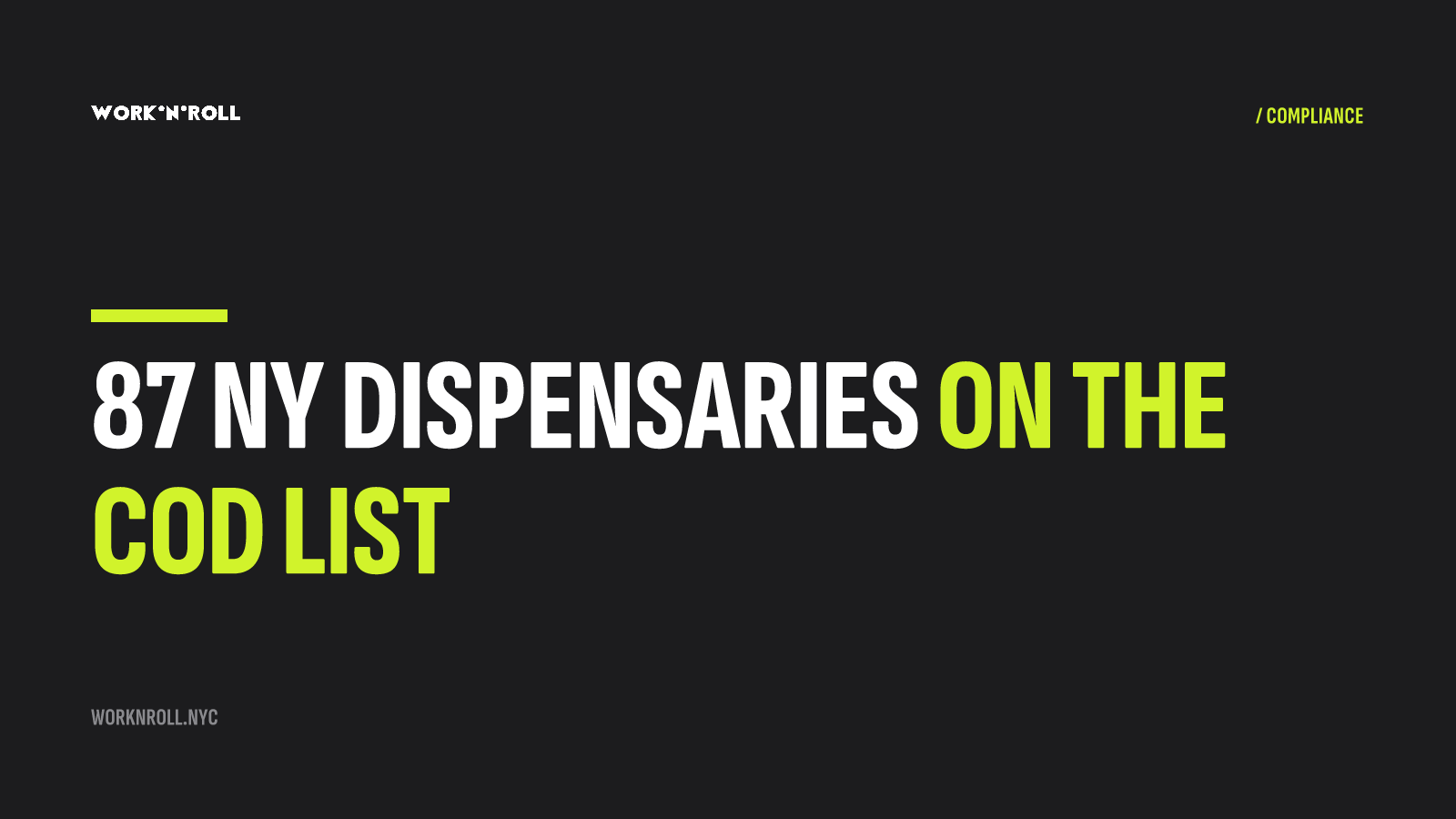

87 licensed cannabis stores in New York owe their suppliers about $3.89 million. That is about 12% of all licensed stores in the state, and they are now on the state’s cash-on-delivery list. A store on that list has to pay cash for every delivery until it clears its debt.
The average store on the list owes about $45,000 across almost 10 unpaid invoices, and the average bill is 281 days late. The rule gives stores 30 days to pay. Many are taking more than nine months.
The Office of Cannabis Management showed these numbers to its Cannabis Advisory Board on September 10, 2026. MJBizDaily reported them a week later, and MMJDaily confirmed them.
People from the industry told the board that some suppliers keep struggling stores off the list. They make side deals instead of reporting them. So the official total is probably lower than what stores really owe. Nobody knows by how much.
Suppliers raised one more problem: they may have to pay excise tax on a sale before the store has paid them for it. OCM did not answer that question at the meeting.
All of this is happening in a market that keeps selling. New York has sold about $3.9 billion of legal cannabis since December 2022. This year’s sales reached about $1.24 billion by September 3. In March, OCM’s John Kagia had predicted $2.6 billion for the full year, so the state is behind that pace.
OCM says part of the gap is a reporting change: since early 2026 it counts sales from Metrc, the state’s tracking system, instead of numbers stores report themselves. It says sales did not really fall. Either way, a statewide total does not tell a supplier when one store will pay.
A store can buy cannabis products on 30-day credit. If it has not paid in full by day 30, the supplier has seven calendar days to notify both the store and OCM. Since September 15, 2026, that report goes through Metrc, tied to the exact delivery it covers.
Once a store is reported, it goes on the cash-on-delivery list. From then on, suppliers may only sell to it for cash, and Metrc can block credit deliveries. The store comes off the list when it settles the debt. It can also dispute a report, but nobody has said how long that takes.
For a buyer, being on the list changes every order. A product can be right for the shelf and still not arrive, because the store now has to pay cash at the door. Budtenders feel it next, when the menu they recommend from gets thinner.
Our post on Revelry Buyers’ Club and why buyers matter looks at where these relationships start. With numbers like these, every product conversation now has a second question: can this store pay on time?
Building a plan for New York retail this fall? We’d love to help. Take a look at our event services when you have a moment.
Sources: MJBizDaily, September 17, 2026, citing OCM’s September 10 Cannabis Advisory Board figures via Vicente LLP; MMJDaily; New York State Office of Cannabis Management. For persons 21 and older. General marketing information, not legal advice.